
How Does Concrete Polishing Work? The Expert Breakdown
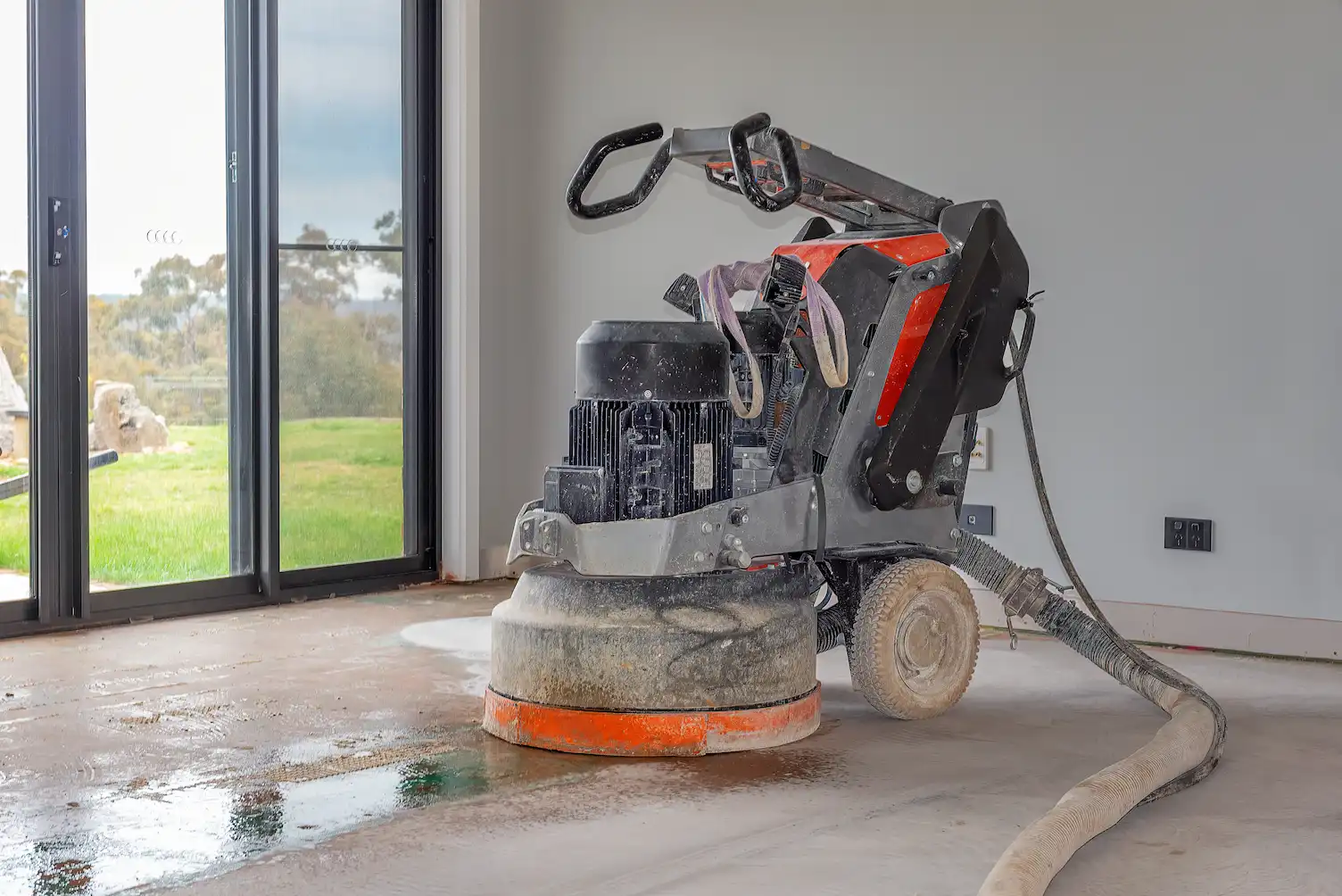
With so many ways to finish concrete, it’s easy to get lost in the technicality of each individual process. Some rely on coatings to add a top layer to an existing slab, while some finishing processes alter the slab itself. As opposed to epoxy finishes where a layer is added on top, polished concrete goes through a mechanical finishing process that makes the concrete smooth, dense, reflective, and easy to maintain.
At Concrete Polish and Epoxy Ohio, we see concrete polishing as part craftsmanship and part surface science. The final result depends on the condition of the slab, the exposure and gloss level you choose, and the protection system applied at the end.
How Concrete is Polished
Concrete polishing utilizes industrial grinders fitted with diamond abrasives. At first, courser diamonds flatten and open the surface, then progressively finer grits remove scratches and build clarity.
The shine doesn’t come from a visually affective coating that sits on top of the slab, but from the concrete itself. Each pass removes the scratch pattern from the previous pass and tightens the surface until light reflects more evenly.
The process begins with preparing the slab, and follows set steps to ensure a gorgeous, durable finish.
- Inspecting and Preparing the Slab
Before anything begins, our team inspects the concrete for coatings, adhesives, cracks, oil, moisture issues, and uneven areas. Preparation is key, because polishing often makes visual imperfections more noticeable. Existing paint, glue, epoxy, topical sealer, or heavy contamination must be removed before the concrete polishing sequence can begin to set the stage for a clean and even surface.
Cracks and joints are filled with compatible repair materials, and damaged areas are patched. The goal is to create a clean, stable surface that can be consistently ground from wall to wall.
- Grinding the Concrete
Depending on the floor, an aggressive tool may be used to remove old coatings, flatten high spots, or expose more aggregate depending on your preference. For a lighter polish, the top surface of the slab is preserved as much as possible, but for an exposed aggregate finish, our team intentionally grinds deeper to reveal the stone inside the concrete.
The amount of concrete removed depends on the finish level and the condition of the slab. About a fraction of a millimeter or roughly 1/32 of an inch could be removed for a light polish, while approximately 1/16 of an inch or more is required if the surface is damaged or more aggregate exposure is desired.
The right approach is to match the cut to the desired appearance, slab thickness, floor flatness, and project conditions. That’s what makes the inspection and preparation stage so important. Setting expectations before work begins ensures you and your contractor are on the same page and will be satisfied with the end results.
- Honing and Refining the Surface
After the initial grind, finer diamond tools are used to make the floor smoother and more uniform. Each grit level removes scratches from the previous grit, ensuring there are no swirl marks, cloudy areas, or uneven gloss.
Lower grit finishes produce a flatter, more matte look, and higher grit creates more reflection. For example, a 400-grit finish is typically matte or satin, while a 3000-grit finish can produce a high gloss.
- Densifying the Concrete
A densifier is a chemical hardener that is typically lithium, sodium, or potassium silicate. It soaks into the concrete and helps harden and tighten the surface, reduce dusting, improve abrasion resistance, and support better gloss retention. It strengthens the concrete from within the surface as opposed to creating a film on top. Our team applies it evenly, allows it to dry and react, removes excess material if needed, and continues polishing.
- Final Polishing
Once the floor is densified, next come the final polishing steps to develop the finished sheen. The exact stopping point depends on the customer’s goals. A hospitality space may want a bright, reflective floor, while a commercial workspace may prefer a satin finish.
Our experienced team pays close attention to edges, corners, and lighting in this stage to ensure a smooth, solid surface. Polished concrete is very honest in its appearance, so uneven grinding, scratches, and rough edges can show up on the finished floor.
- Sealing and Guarding the Slab
A guard, stain protector, or penetrating sealer is used to help the polished concrete floor resist spills, oils, dirt, and routine staining. This final layer is usually thin and breathable, meant only to enhance stain resistance and ease maintenance processes instead of building a thick wear layer.
Transform Your Floors with Concrete Polishing
Done correctly by a qualified professional, concrete polishing can create a floor that is attractive, durable, and practical for homes, businesses, and industrial spaces. If you are considering polished concrete, the best first step is a slab evaluation.
Concrete Polish and Epoxy Ohio’s trained technicians combine years of technical experience with attention to detail and excellent customer service, ensuring every customer is completely satisfied with the finished product. Contact us today to discuss your project and schedule a free, no-obligation estimate for a new polished concrete floor in your home or business.
Recent Posts